Press Release Tips
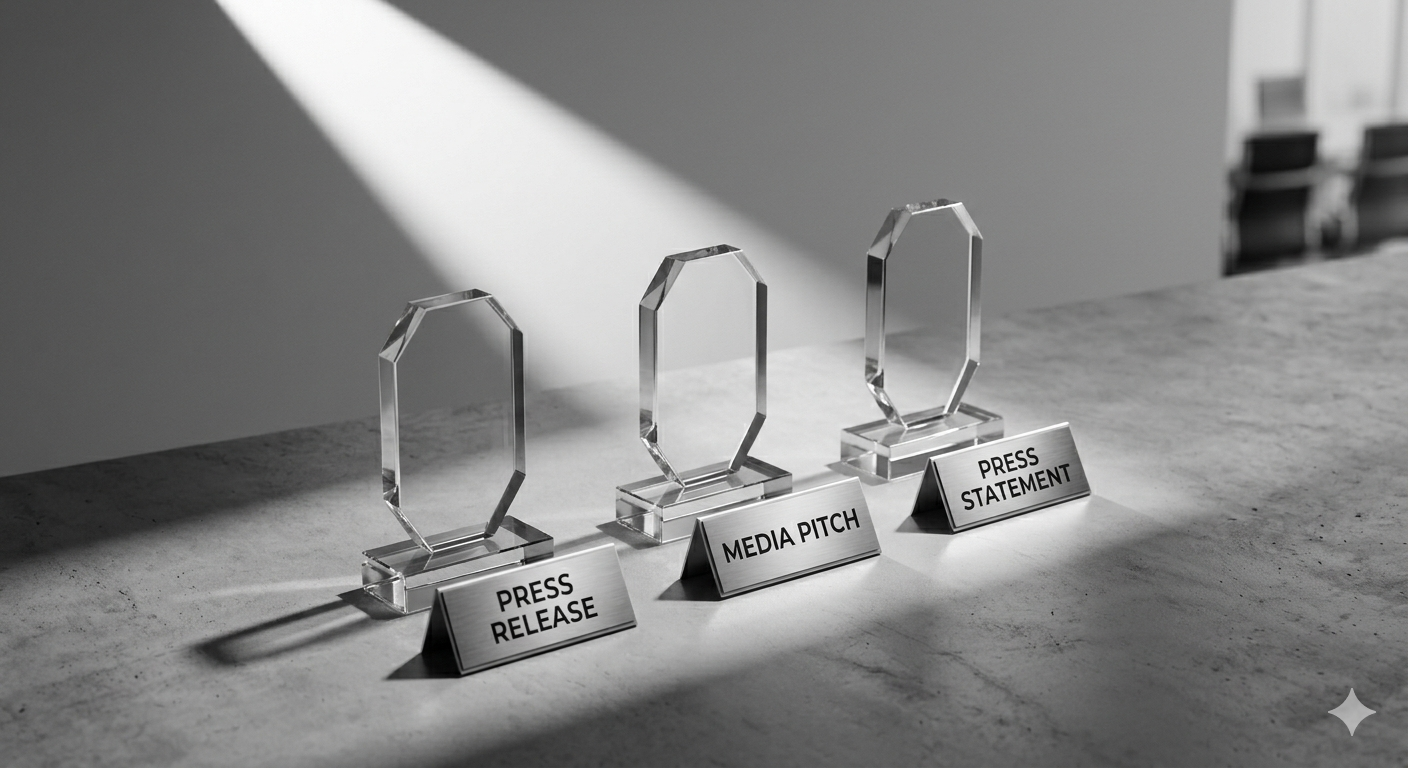
The Difference Between a Press Release, a Media Pitch, and a Press Statement
Mar 29, 2026
Press Release Tips
A press release also called a news release is a formal written announcement intended to be published by the media. It is written in the third person, in a journalistic style, and formatted to look like a news story.
If you have ever tried to get media coverage for your brand, you have probably come across these three terms: press release, media pitch, and press statement. Many people use them interchangeably but they are distinctly different documents with different purposes, different audiences, and different rules. Using the wrong one at the wrong time can mean your message never lands. This guide breaks down what each one is, when to use it, and how to get the most out of each.
The Press Release
A press release also called a news release is a formal written announcement intended to be published by the media. It is written in the third person, in a journalistic style, and formatted to look like a news story. The goal is to make it as easy as possible for an editor to publish your content with minimal changes.
Press releases are used for specific, newsworthy announcements: product launches, funding rounds, new hires, partnerships, awards, or company milestones. They follow a strict structure headline, dateline, inverted pyramid lead, body, boilerplate, and contact information and are typically 400 to 600 words long.
Press releases are distributed broadly sent to multiple journalists, editors, and media platforms simultaneously. They are public documents and, once released, are fair game for any journalist to cover.
Use a press release when:
• You have specific, factual news to announce
• You want broad simultaneous coverage across multiple outlets
• The announcement is formal and the content is final
• You want the story available for any journalist to pick up
The Media Pitch
A media pitch is a personalized message usually an email sent directly to a specific journalist or editor to propose a story idea. Unlike a press release, a pitch is not a finished article. It is a compelling argument for why a particular journalist should write a story about you, your company, or a topic you are connected to.
Good pitches are short typically three to five paragraphs and are tailored to the individual journalist's beat, publication, and recent work. A pitch sent to a technology journalist at TechCabal should look completely different from a pitch sent to a business journalist at BusinessDay, even if they are about the same company.
In Nigeria, where personal relationships with journalists carry significant weight, a well-crafted personalised pitch often outperforms mass press release distribution for top-tier placements. It shows that you have done your research and that you respect the journalist's time.
Use a media pitch when:
• You want coverage in a specific publication
• The story requires journalist investigation and original reporting
• You have an exclusive or want to offer first access to a story
• You are proposing a feature, interview, or opinion piece rather than hard news
Key Insight: A press release tells the media what happened. A media pitch tells a specific journalist why they personally should care and why their readers will too.
The Press Statement
A press statement is an official response or declaration from a company or individual on a specific matter. Unlike a press release, a press statement does not announce news it responds to it. Press statements are commonly used during a crisis, controversy, or public debate. They can also be used to clarify misinformation, express a company's position on a policy issue, or respond to a competitor's claims.
Press statements are shorter and more direct than press releases often just two or three paragraphs. They are usually issued in response to media enquiries or published proactively when a company needs to get its position on record quickly. In Nigeria, press statements are commonly seen in the context of regulatory disputes, political controversies, consumer complaints, and reputational crises.
Use a press statement when:
• You need to respond to a news story, accusation, or public controversy
• A journalist has contacted you for comment on a sensitive matter
• Your company or brand is being misrepresented in the media
• You want to publicly clarify your position on an issue without making it a full news announcement
Quick Comparison Table
Which One Does Your Brand Need Right Now?
If you are launching a product, announcing a milestone, or sharing company news you need a press release. If you want a specific publication to write a deep-dive story about your brand you need a media pitch. And if your brand is under scrutiny, facing a public controversy, or needs to respond to something in the news you need a press statement.
Most Nigerian brands benefit from having all three in their PR toolkit. A strong PR strategy uses press releases for regular news distribution, media pitches for targeted high-value placements, and press statements for protecting and managing reputation when it matters most.
Beta Digitals PR handles all three. From press release writing and distribution to media pitching and crisis statement drafting; we manage your media narrative end to end. Visit pr.betadigitals.com.



Get Press Coverage Now
Distribute your press release to 500+ news outlets.
Get Started View Packages